Last updated: 2026-08-30
The Patent Cooperation Treaty (PCT, 158 contracting states so far) provides a streamlined process for filing international patent applications, allowing inventors to seek protection in multiple countries, including China.
Entering the PCT national phase in China through CNIPA (China National Intellectual Property Administration) is essential for foreign inventors seeking patent protection in one of the world’s largest markets. Timely filing, accurate translations, and fee payments are critical to securing patent rights under Chinese law. This guide provides a complete step-by-step process, practical tips, and important deadlines for 2026.
What Is the PCT National Phase
The PCT national phase is the stage where an international PCT application (See more about the PCT international phase) transitions to individual countries or regions for further processing.
The national phase in China entry must be filed with the China National Intellectual Property Administration (CNIPA).
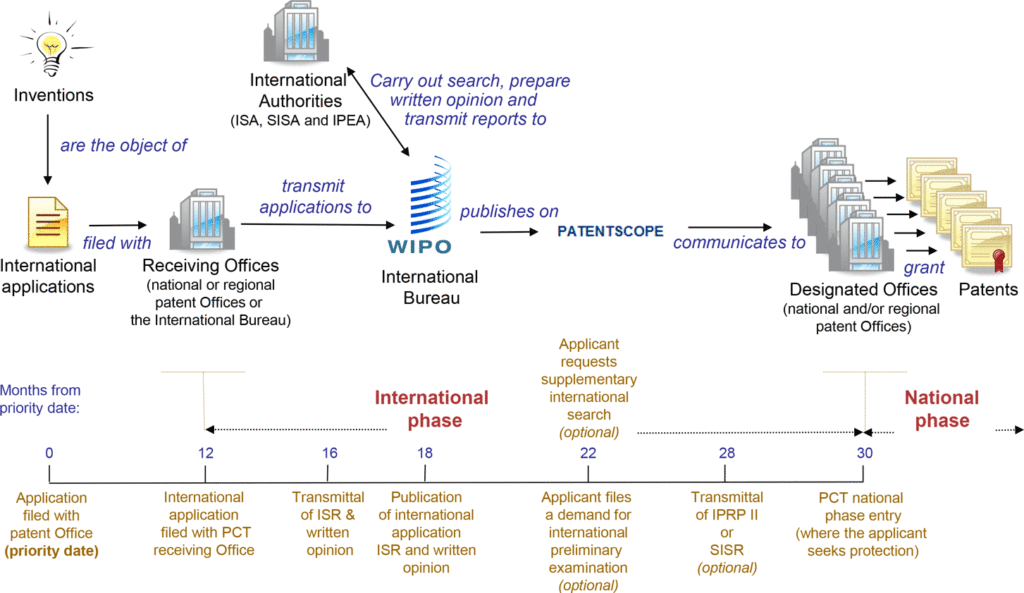
PCT National Phase Deadline in China
Timing is critical for a successful national phase entry. Missing deadlines can result in the loss of patent rights.
The deadline for entering the PCT national phase in China is 30 months from the earliest priority date.
If the deadline is missed, China offers a 2-month grace period (up to 32 months) with a late surcharge of CNY 1000. This grace period can only be used once.
Applicants must complete the national phase entry with CNIPA before the deadline, including submitting the Chinese translation and paying the required official fees.
Tips:
- File early to avoid surcharges and ensure sufficient time to prepare required documents.
- Know more time limits for entering the national/ regional Phase in other contracting states.
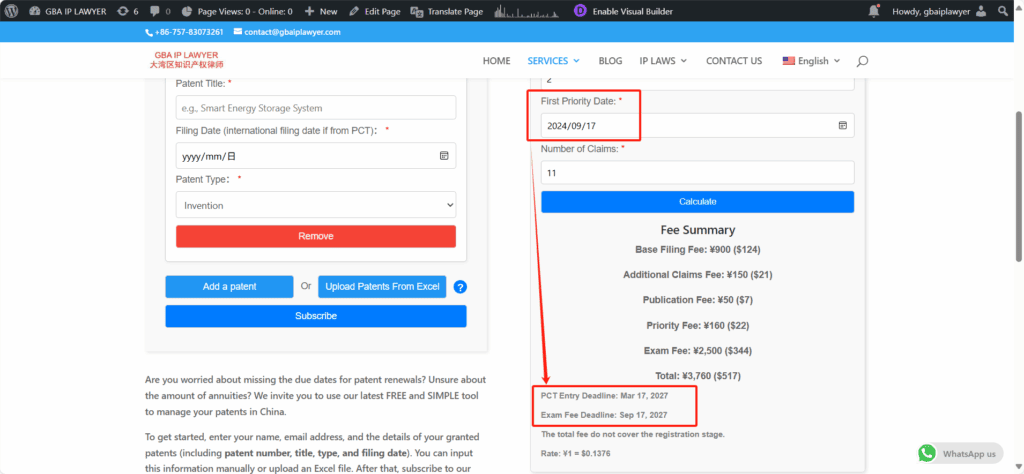
- We strongly recommend using our official fee calculator to compute the time limits for PCT entry and examination fees in China.
Documents Required for PCT National Phase Entry
To enter the PCT national phase in China, applicants must submit the following:
- Request Form
Applicants MUST select an invention or utility model (both is NOT allowable, besides a national application), and input a CORRECT PCT application number in the form. - Chinese Translation
China patent filing requires a full translation of the application into Chinese, including the description, claims, drawings (if text is contained), abstract, and amendment (if applicable), if the international application was filed in a foreign language, even if in traditional Chinese. Tips for accurate translations:- Translate the original text accurately and completely, even if some expressions should be corrected or removed;
- Ensure consistency in technical terms for the entire application document;
- reverse formats of original form or drawings;
- text of drawings, if any, should be translated too.
- Power of Attorney (POA)
A signed Power of Attorney must be submitted. No legalization or notarization is required. - Amendments (Optional)
Applicants may submit voluntary amendments to claims or descriptions in accordance with Articles 19/34 (within 2 months from the entry date) or Articles 28/41 (at the time of entry) of the PCT. These amendments must clearly indicate the modifications made with MARKUP in Word format, as they can show the difference between the original and the amendments.

- Assignment Document (Optional)
If the applicant has been changed since the entry of the national phase, a certificate of application assignment must be provided. - Certified Priority Document (Optional)
If the priority document has not been submitted during the international phase, it must be provided at the national phase entry.
Official Fees for PCT National Phase in China
Official fees for entering the PCT national phase in China include:
Filing stage:
- Filing fee: RMB 900 (invention) / RMB 500 (utility model)
- Publication fee (only for inventional): RMB 50
- Priority fee: RMB 80 per priority
- Additional filing fee for claims over ten (if applicable): RMB 150 each
- Grace period fee for 2 months: RMB 1,000 (if filed after 30 months)
Post-filing stage:
- Substantive examination fee (only for inventional; should be paid within 3 years): RMB 2,500
- Registration fees: see the annuity of the grant year.
Tips:
- Download the complete fee schedule and read more in section II of Patent Fees – PCT Filing Fees;
- Read more about the official fees for patents in China.
- File the entry before your deadline to avoid any grace period fees.
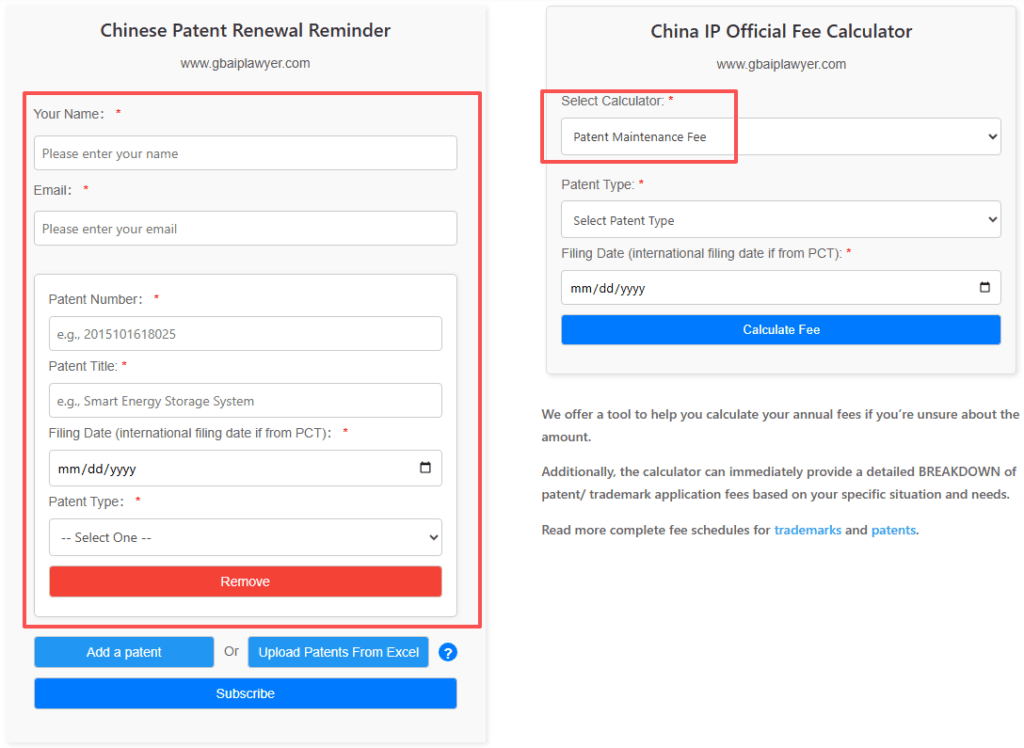
- Strongly recommend using our calculator for official fees to estimate in advance as below.
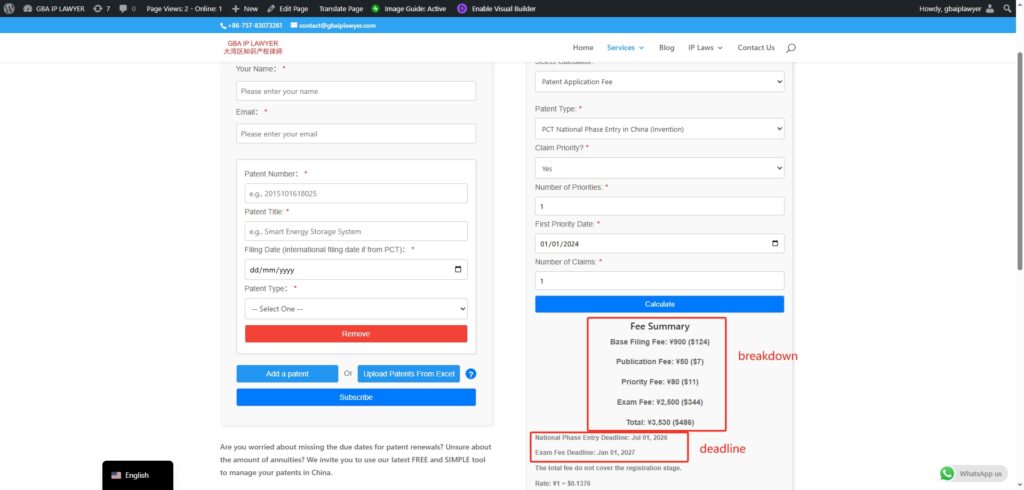
Step-by-Step Procedure for CNIPA Filing
1. Appoint a Patent Agent
Foreign applicants cannot file directly with CNIPA.
They must appoint a Chinese patent agency registered with the CNIPA. The patent agent will handle:
• submission of the national phase request
• Chinese translation of the application
• payment of official fees
• communication with CNIPA
Tip:
- Choose an agent with expertise in Chinese patent law and fluency in English to avoid communication issues.
- Attorney fees vary depending on the complexity of the application. You may require a fixed price/ rate to ensure transparent pricing and avoid hidden costs.
- Click here to verify your potential patent attorney.
- It is perfect if your attorney can handle the translation, too. Our fee rate is 0.1 USD per English word into Chinese.
2. File the Application and pay all official fees
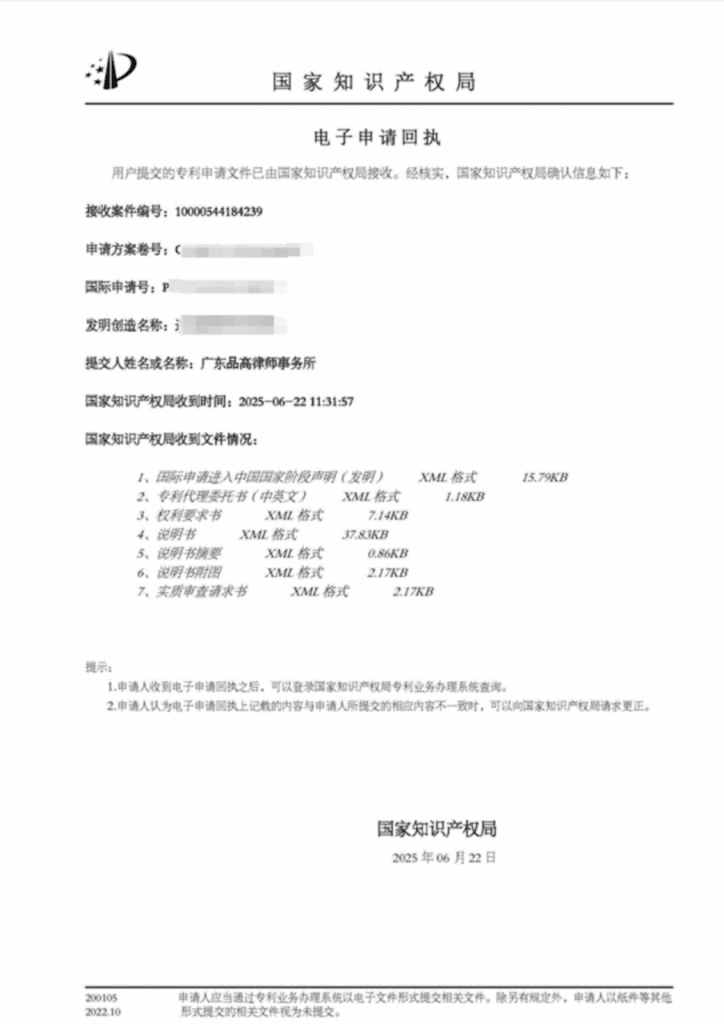
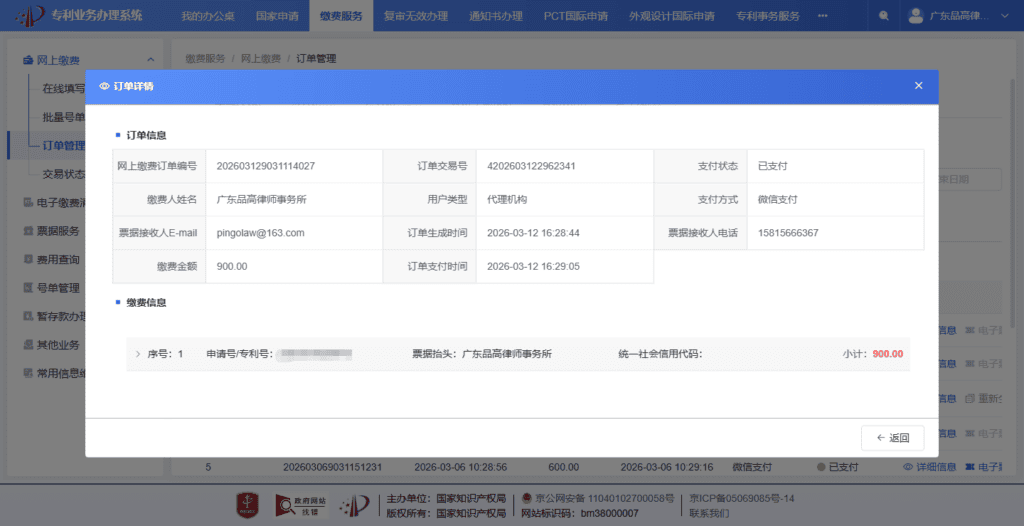
Submit all required documents and pay the government fees of filing stage to CNIPA via your patent agent, either electronically or in paper form (email is NOT acceptable).
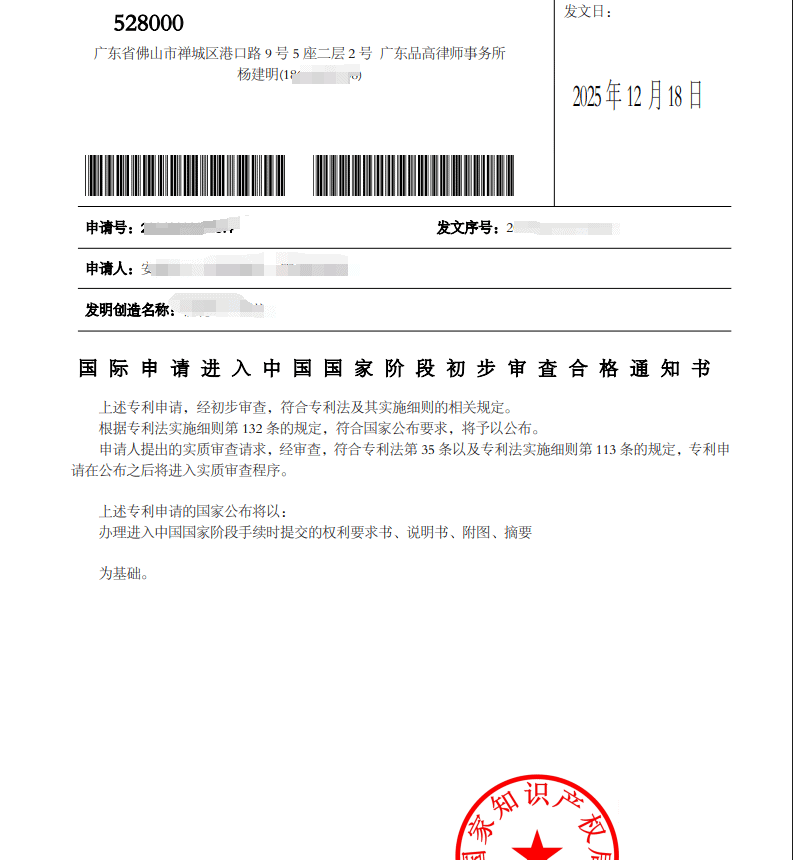
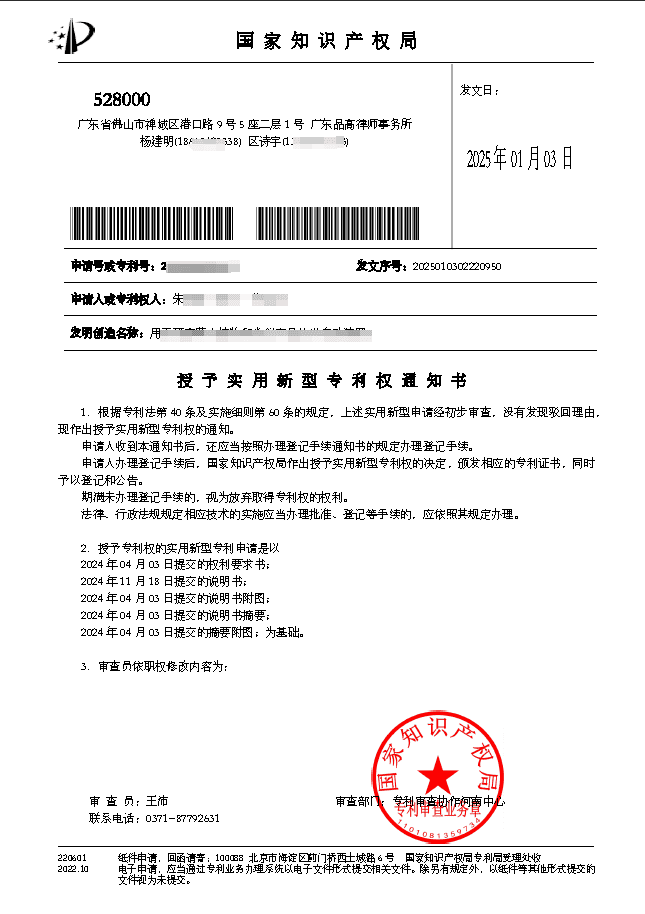
Electronic filing is faster and more cost-effective. Ensure your agent confirms receipt by CNIPA as below:
You will receive the following notices if your entry request is acceptable.
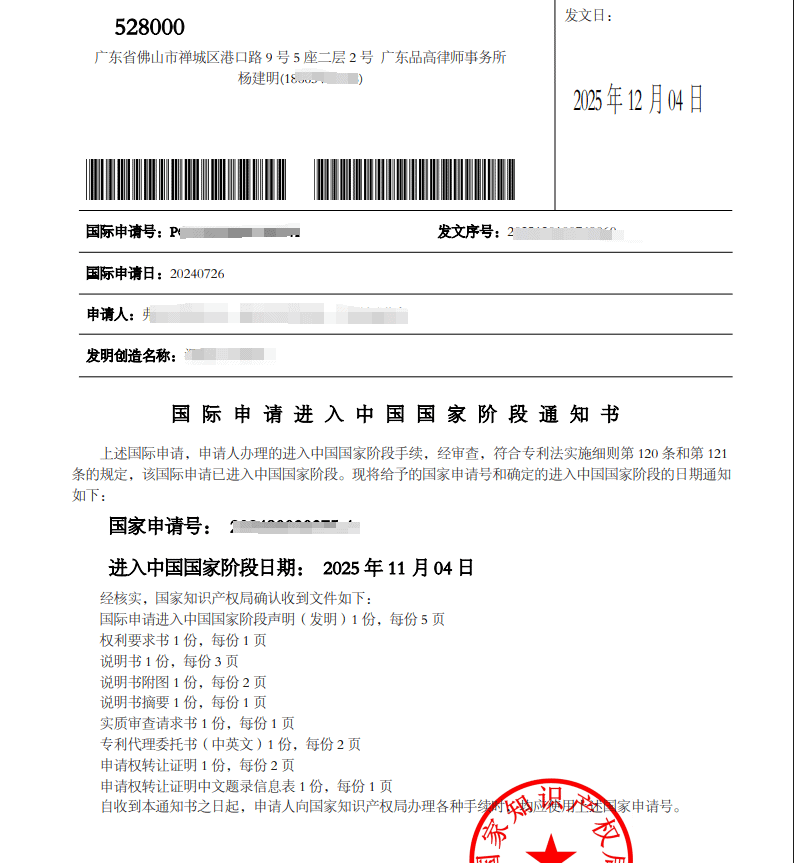
3. Respond to Office Actions
CNIPA may issue office actions after formal examination and substantive examination:
Formal Examination
- Utility models are only subject to formal examination.
- A patent evaluation report (N/A for invention) can be requested to enhance enforceability in patent licensing, customs intellectual property registration, e-commerce platforms, and exhibitions.
Substantive Examination (only for inventions)
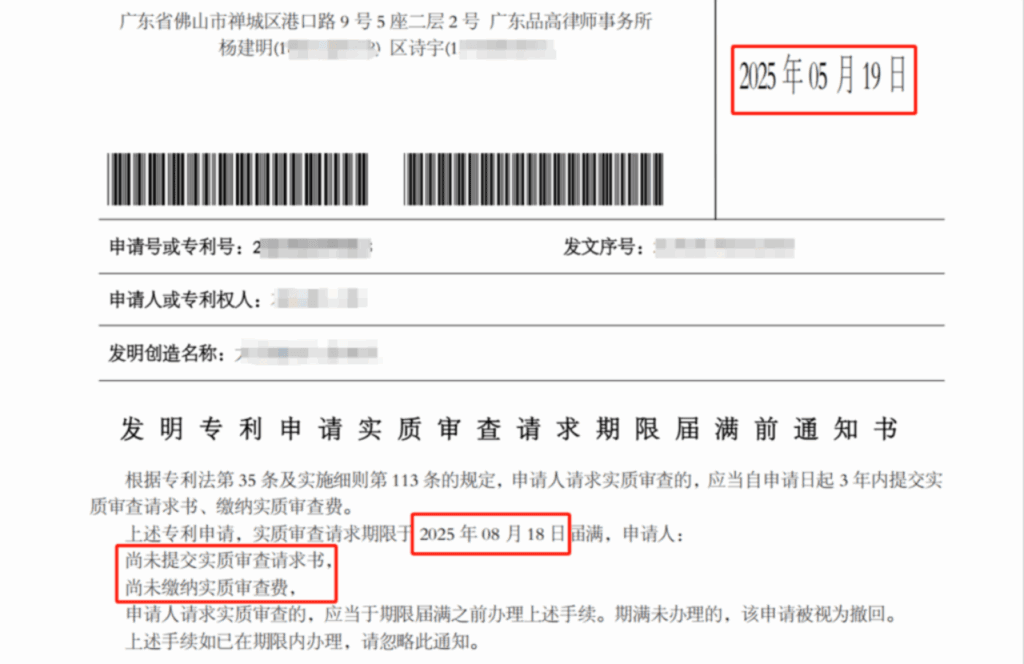
- Unlike some jurisdictions, China requires a separate request for substantive examination, which must be filed within 3 years from the priority date.
- Cost: CNY 2,500
- Tip: Request the examination WHILE filing the entry, and pay the examination fee of 2500 CNY AFTER the entry has been approved (rather than doing it while filing, to avoid wasting money if the entry request is rejected).
Respond to Office Actions
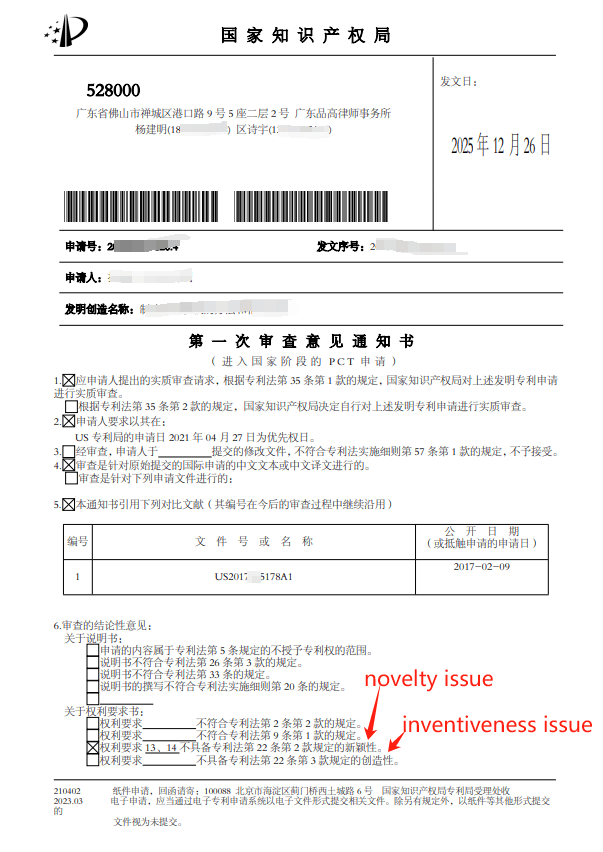
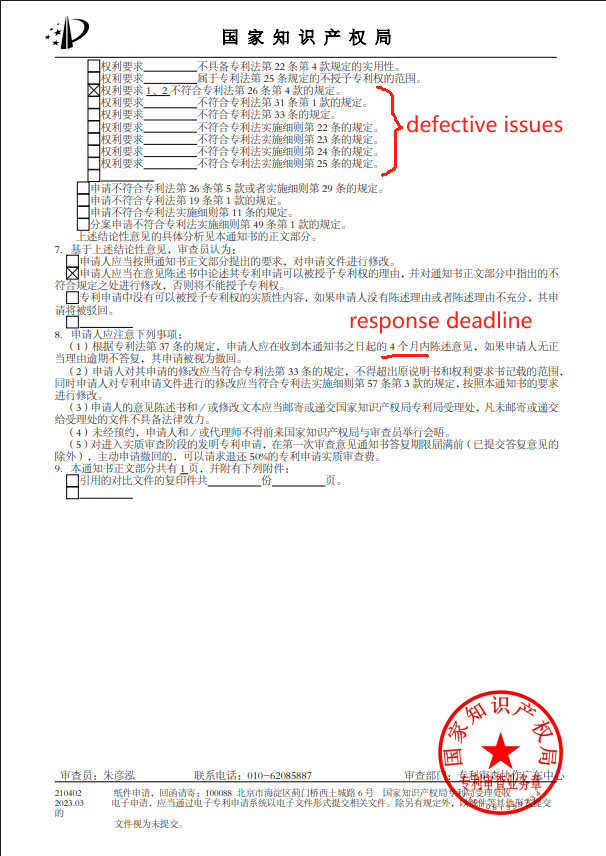
- CNIPA may issue OAs (1-2 times typically) requesting clarifications, answers, or amendments.
- Respond promptly through your agent within time limits (read more about the extension fee if applicable ):
- For invention: the 1st OA has 4 months, and each subsequent OA has 2 months;
- For utility models, the response period for each OA is 2 months.
- Common Issues: Incorrect translations, unclear scope of claims, lack of novelty/ inventiveness.
4. Rejection and Appeal (optional)
- If CNIPA rejects the application, the applicant may file a request for re-examination within 3 months.
- Appeals may be taken to the Beijing Intellectual Property Court if the reexamination decision is unfavourable.
5. Grant and Maintenance
- If allowed, you must register it by paying the annuity during the grant year to obtain a patent certificate and gazette.
- You must pay annual fees to maintain the patent in force before the PCT filing date of each year.
- Tip: Utilize our renewal reminder system to manage your patents in China for free, and our maintenance fee calculator.
Common Mistakes When Entering the PCT National Phase
Late Filing or Payment
Failing to file the application or pay ALL the required government fees within the 30+2 months.
Translation Issues
Discrepancies (e.g., omissions, mistranslations) exist between the Chinese translation and the PCT original application (i.e., the PCT international publication version).
Missing Documents
Failing to submit the required request form, claims, description, abstract, drawings, POA, or amendments (if any).
Wrong Patent Type
Selecting an inappropriate patent type (e.g., procedure/ method/ IT/ chemical/material can only be filed as an invention rather than a utility model).
Procedural Management Errors
Poor procedural management, such as missing important deadlines, failing to request substantive examination in time, or responding late to official actions (OAs).
Frequently Asked Questions
Generally, the deadline is 30 months from the priority date.
Yes, a one-time grace period of two additional months is allowed (up to 32 months).
Yes, but the certified copy of the PCT original application must be supplemented.
No, you cannot.
When a PCT application enters the Chinese national phase, you must choose to file either as an invention or a utility model, but not both, because the PCT application is a single application.
However, you can utilize double patenting via the Paris route.
Yes. Amendments include active amendments and passive amendments, but please don’t add any new subject matters:
Proactive amendments:
For invention applications, there are THREE opportunities to amend: Based on Article 28/41 of PCT, it must be submitted at the same time as entering the Chinese national phase:
When the applicant submits a request for substantive examination;
Within 3 months of receiving the notice of entering the substantive examination.
However, for utility model applications, besides the 28/41 of PCT above, there is only ONE opportunity to amend: Within 2 months of the filing (entering) date in China.
Passive amendments:
After receiving OAs, applicants can amend their applications according to the issues pointed out in the OAs.
Know more about the amendment under Article 19/34 during the international phase.
Hong Kong
PCT applies to Hong Kong, effective July 1, 1997.
Applicants may record a standard patent within 6 months from CNIPA’s publication date, and register it within 6 months from CNIPA’s granting date. See more about applying for a standard patent in Hong Kong.
Besides that, the applicant may file a short-term patent application within 6 months from the date of entering the national phase in China. See more about applying for a short-term patent in Hong Kong.
Taiwan, Macau
PCT is NOT applicable to Macau, but any applicant from a Paris Convention member may claim a priority within 12 months from the priority date, since the Paris Convention is applicable to Macau. (Portugal is one of the original signatories of the Paris Convention (1883) and its protection was extended to the territory prior to the transfer of sovereignty to China on December 20th, 1999; after the transfer, China issued a notification to WIPO clarifying that the country would be responsible for the territory’s international obligations.) See more How To Protect Patents In Macau.
Taiwan is NOT a member of PCT and therefore is unable to accept the PCT application. Any applicant from a WTO member may claim a priority within 12 months from the priority date, since Taiwan is a member state of WTO. See more about PCT in Taiwan.
Yes, you can. See more about How to Request PPH for Patent Applications in China.
No. The number of claims is determined by the original PCT international application.
Since foreign applicants cannot provide recognized income proof from China, obtaining a reduction from official fees is impossible unless they run a business and pay tax in China.
The following circumstances where exemptions may be approved:
If the CNIPA is the receiving office for your PCT application and conducts your international search, the filing fee and the additional filing fee will be exempted.
If the CNIPA issues an international search report and an international preliminary examination report, the substantive examination fee is exempt.
A: For inventions, business methods cannot be patented.
For utility models, the method/ process/ material cannot be patented and should be converted into invention applications.
If foreign applicants do not have a residence or business office in China, they must appoint a registered Chinese patent agent to handle the patent prosecution.
Further information
Internal Links for Further Guidance
External References
- WIPO PCT Guide
- WIPO’s PCT Applicant’s Guide China
- CNIPA’s PCT guide
- CNIPA’s FAQs about the PCT national phase
- Tips on the PCT national phase in other main countries.
The national phase costs will vary depending on the number of words translated and the number of claims. If you need a detailed quotation for China patent filing, please email us with your PCT application number at [email protected].