Dernière mise à jour : 28 septembre 2026
Entering the PCT national phase in China through CNIPA (China National Intellectual Property Administration) is essential for foreign inventors seeking patent protection in one of the world’s largest markets. Timely filing, accurate Chinese translations, and fee payments are critical to securing patent rights under Chinese law.
This guide provides a complete step-by-step process, practical tips, and important deadlines for 2026 — whether you are entering the national phase from a PCT application or need to understand the CNIPA filing requirements, fees, and procedure.
| National phase deadline | 30 months from earliest priority date (32 months with grace period) |
| Governing body | CNIPA (China National Intellectual Property Administration) |
| Filing fee | RMB 900 (invention) / RMB 500 (utility model) |
| Substantive examination fee | RMB 2,500 (invention only, within 3 years of priority date) |
| Grace period surcharge | RMB 1,000 (for filing after 30 months) |
| Langue | Chinese translation required (full application) |
| Patent agent required | Yes — foreign applicants must appoint a registered Chinese patent agent |
| Total official fees (approx.) | RMB 3,450–4,000 (filing + publication + examination, excluding attorney fees) |
What Is the PCT National Phase?
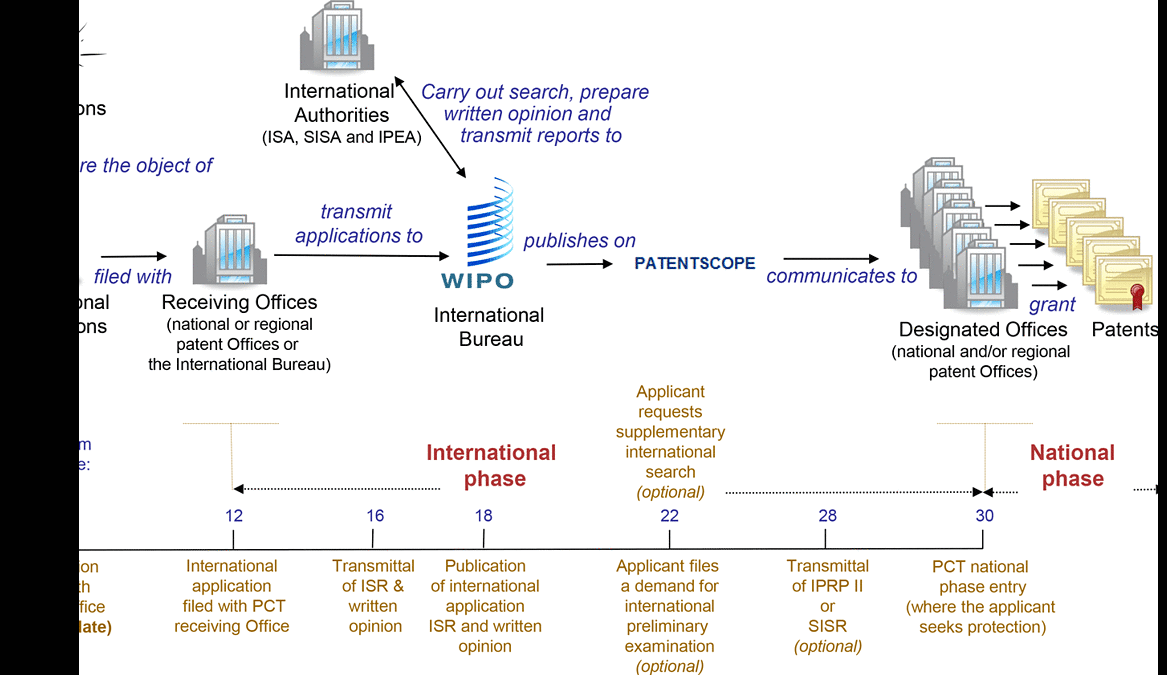
The PCT national phase is the stage where an international PCT application (see more about the Phase internationale du PCT) transitions to individual countries or regions for further processing. The PCT system currently has 158+ contracting states.
The national phase entry in China must be filed with the Administration nationale chinoise de la propriété intellectuelle (CNIPA). This is where your international PCT application is examined under Chinese patent law, and where a patent will ultimately be granted or rejected.
For foreign applicants without a residence or business office in China, the national phase entry must be handled through a registered Chinese patent agent. The agent will manage document submission, Chinese translation, fee payment, and all communication with CNIPA.
Deadline for PCT National Phase Entry in China
Le respect des délais est essentiel à la réussite de l'entrée en phase nationale. Le non-respect des délais peut entraîner la perte des droits de brevet.
The deadline for entering the PCT national phase in China is 30 months from the earliest priority date.
If the deadline is missed, China offers a one-time 2-month grace period (up to 32 months) with a late surcharge of CNY 1,000. This grace period can only be used once. After 32 months, the application is considered withdrawn and cannot be restored.
Les candidats doivent effectuer la phase d'entrée nationale auprès du CNIPA avant la date limite, y compris soumettre la traduction en chinois et payer les frais officiels requis.
Conseils :
- File early to avoid surcharges and ensure sufficient time to prepare required documents, especially the Chinese translation.
- En savoir plus time limits for entering the national/regional phase in other PCT contracting states.
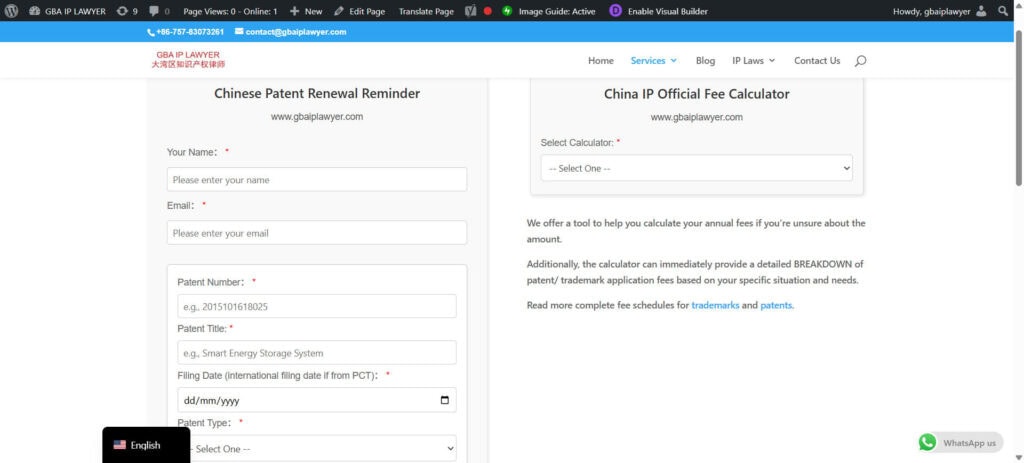
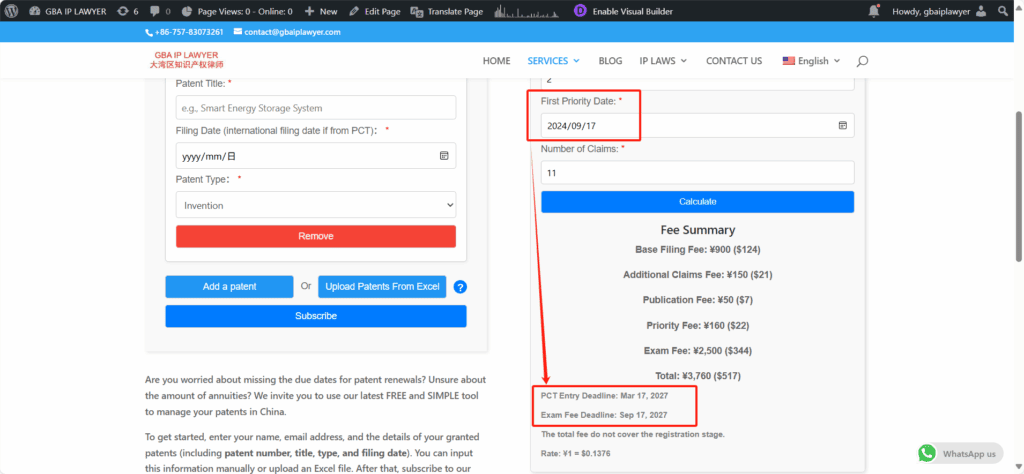
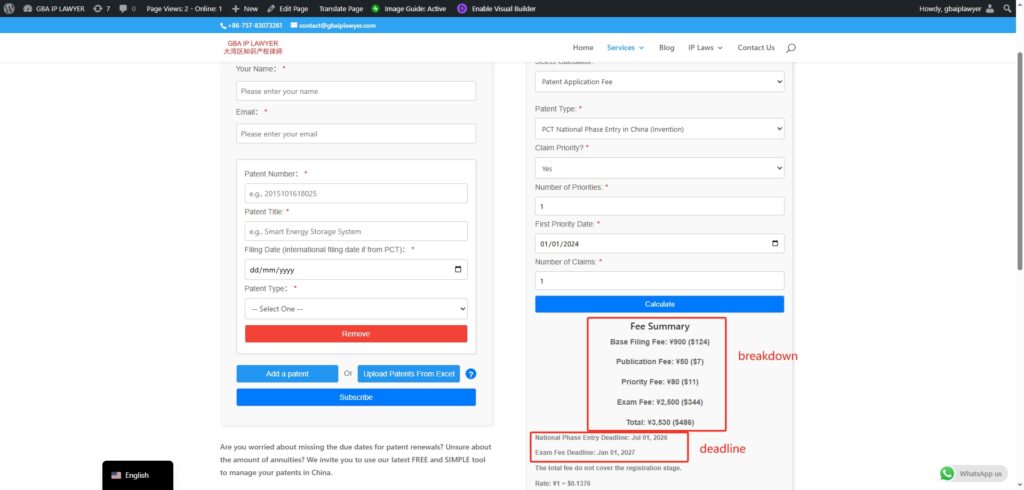
- Nous recommandons vivement d'utiliser notre official fee calculator to compute the time limits for PCT entry and examination fees in China.
Documents requis pour l'entrée en phase nationale du PCT
Pour participer à la phase nationale du PCT en Chine, les demandeurs doivent soumettre les documents suivants :
Formulaire de demande
Applicants MUST select an invention or utility model (both is NOT allowable, besides a national application), and input a CORRECT PCT application number in the form.
Traduction en chinois
China patent filing requires a full translation of the application into Chinese, including the description, claims, drawings (if text is contained), abstract, and amendment (if applicable). This applies if the international application was filed in a foreign language — even if in traditional Chinese.
Tips for accurate translations:
- Traduire le texte original de manière exacte et complète, même si certaines expressions doivent être corrigées ou supprimées ;
- Veiller à la cohérence des termes techniques dans l'ensemble du document de candidature ;
- Reserve formats of original form or drawings;
- Text of drawings, if any, should be translated too.
Translation quality is critical: Discrepancies between the Chinese translation and the PCT original application (the international publication version) are one of the most common reasons for office actions and potential invalidation. Use a qualified patent translator or patent agent with technical expertise in your field. Our translation rate is 0.1 USD per English word into Chinese.
Procuration (POA)
Une procuration signée doit être soumise. Aucune légalisation ou notarisation n'est requise. Download a POA template here.
Amendements (facultatif)
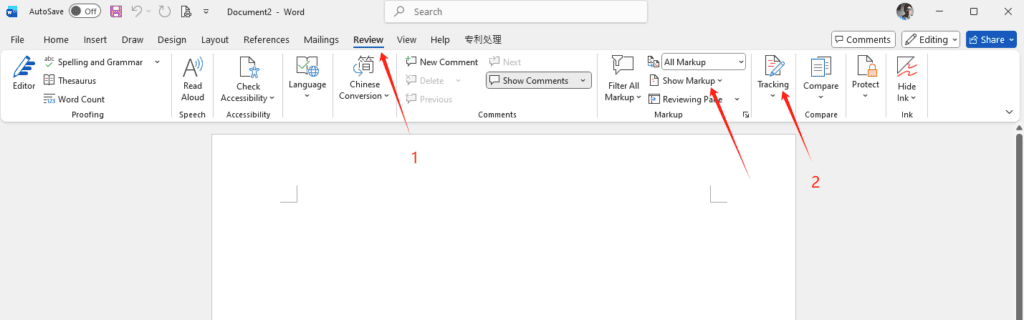
Applicants may submit voluntary amendments to claims or descriptions in accordance with Articles 19/34 (within 2 months from the entry date) or Articles 28/41 (at the time of entry) of the PCT. These amendments must clearly indicate the modifications made with MARKUP in Word format, showing the difference between the original and the amendments.
Document d'affectation (facultatif)
Si le demandeur a changé depuis le début de la phase nationale, un certificat d'affectation de la demande doit être fourni. Download an assignment template here.
Document de priorité certifié (facultatif)
Si le document de priorité n'a pas été présenté lors de la phase internationale, il doit être fourni lors de l'entrée en phase nationale.
Taxes officielles pour la phase nationale du PCT en Chine
Official fees for entering the PCT national phase in China include the following (verified as of August 2026):
Filing Stage
| Fee Item | Amount | Remarques |
|---|---|---|
| Filing fee (invention) | RMB 900 | Required at entry |
| Filing fee (utility model) | RMB 500 | Required at entry |
| Publication fee (invention only) | RMB 50 | Paid at filing or later |
| Priority fee | RMB 80 per priority | Per priority claim |
| Additional filing fee for claims over 10 | RMB 150 each | If applicable |
| Grace period surcharge | RMB 1,000 | If filed after 30 months |
Post-Filing Stage
| Fee Item | Amount | Remarques |
|---|---|---|
| Substantive examination fee (invention only) | RMB 2,500 | Must be paid within 3 years of priority date |
| Registration/annuity fees | Varies by year | See annuity schedule |
Conseils :
- Download the complete fee schedule (PDF) and read more in section II of Patent Fees — PCT Filing Fees.
- En savoir plus sur la official fees for patents in China.
- Déposez l'inscription avant la date limite pour éviter les frais liés au délai de grâce.
- Strongly recommend using our official fee calculator to estimate fees in advance.
Fee reduction policy (2025): The following circumstances may qualify for fee exemptions:
- If CNIPA was the receiving office for your PCT application and conducted your international search, the filing fee and additional filing fee are exempted.
- If CNIPA issued an international search report and an international preliminary examination report, the substantive examination fee (RMB 2,500) is exempt.
These exemptions are automatically applied when the conditions are met.
Procédure étape par étape pour le dépôt d'une demande auprès de la CNIPA
1. Nommer un mandataire en brevets
Foreign applicants without a residence or business office in China cannot file directly with CNIPA. They must appoint a Chinese patent agency registered with CNIPA. The patent agent will handle:
- Submission of the national phase request
- Chinese translation of the application
- Payment of official fees
- Communication with CNIPA throughout prosecution
Conseils :
- Choisissez un agent spécialisé dans le droit chinois des brevets et parlant couramment l'anglais afin d'éviter les problèmes de communication.
- Attorney fees vary depending on the complexity of the application. Request a fixed price/rate to ensure transparent pricing and avoid hidden costs.
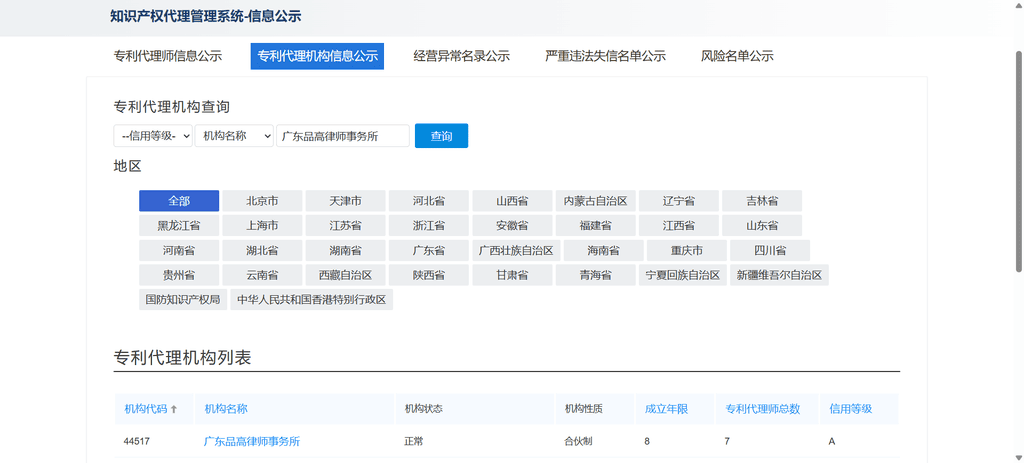
- Click here to verify your potential patent attorney through the CNIPA online system.
- It is ideal if your attorney can handle the translation as well. Our translation rate is 0.1 USD per English word into Chinese.
2. File the Application and Pay All Official Fees
Submit all required documents and pay the government fees of the filing stage to CNIPA via your patent agent. Filing can be done either electronically or in paper form (email is NOT acceptable).
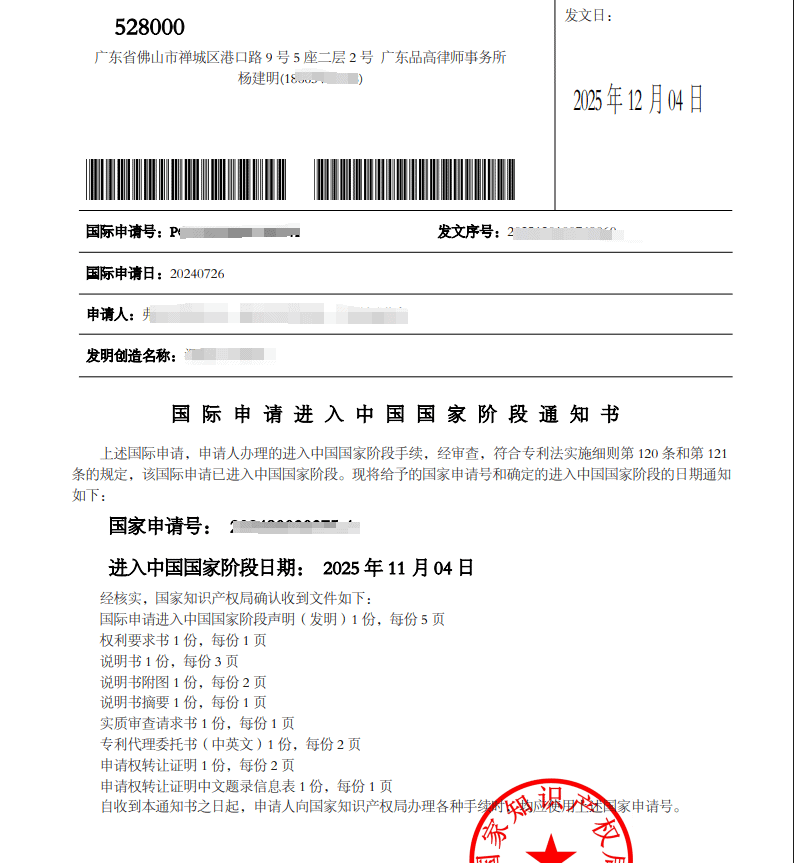
Electronic filing is faster and more cost-effective. Ensure your agent confirms receipt by CNIPA. You will receive official notices confirming that your entry request has been accepted.
3. Répondre aux notifications de l'Office
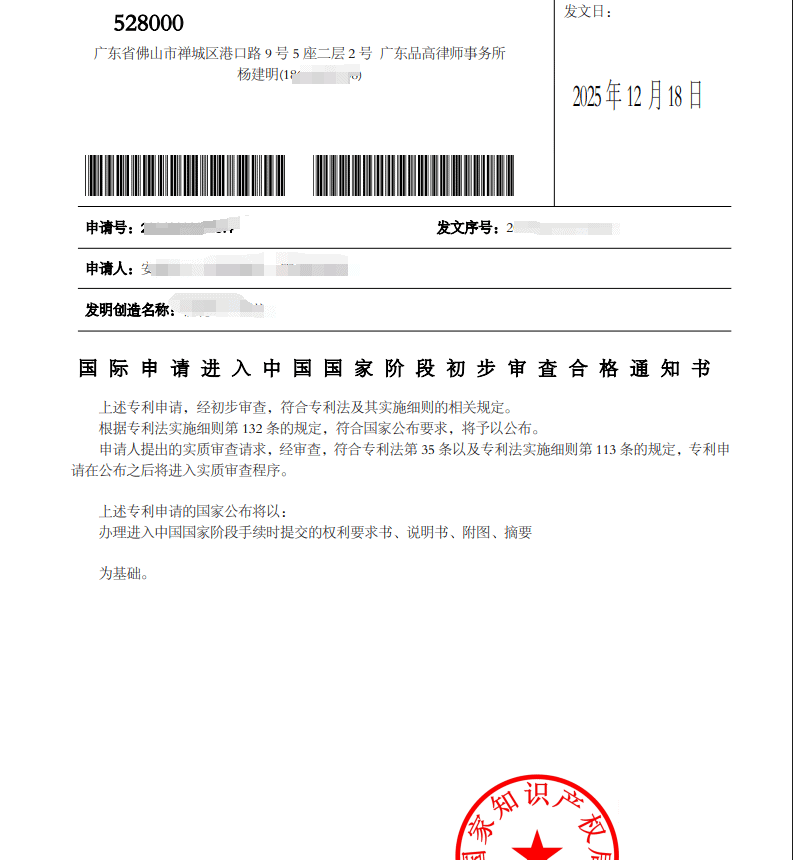
CNIPA may issue office actions (OAs) after formal examination and substantive examination:
Examen formel
- Les modèles d'utilité ne sont soumis qu'à un examen formel.
- A rapport d'évaluation de brevet (N/A for inventions) can be requested to enhance enforceability in patent licensing, China Customs IP registration, e-commerce platforms, and exhibitions.
Substantive Examination (Inventions Only)
Unlike some jurisdictions, China requires a separate request for substantive examination, which must be filed within 3 years from the priority date.
- Coût : CNY 2,500
- Conseil : Request the examination WHILE filing the entry, and pay the examination fee of RMB 2,500 AFTER the entry has been approved (rather than paying simultaneously with filing, to avoid wasting money if the entry request is rejected).
Responding to Office Actions
CNIPA may issue OAs (typically 1-2 times) requesting clarifications, answers, or amendments. Respond promptly through your agent within the time limits:
- For inventions: the 1st OA has a 4-month response period; each subsequent OA has a 2-month response period.
- For utility models: the response period for each OA is 2 months.
- En savoir plus extension fees if applicable.
Common issues raised in OAs include: incorrect translations, unclear scope of claims, and lack of novelty/inventiveness.
4. Rejection and Appeal (Optional)
If CNIPA rejects the application, the applicant may:
- File a request for réexamen à l'intérieur 3 mois of the rejection notice;
- Appeal to the Tribunal de la propriété intellectuelle de Pékin if the re-examination decision is unfavourable.
5. Octroi et gestion
If the application is allowed, you must:
- Register the patent by paying the annuity during the grant year to obtain a patent certificate and gazette publication;
- Pay annual fees to maintain the patent in force. Annual fees are due before the PCT filing date of each subsequent year.
Conseil : Utilize our renewal reminder system to manage your patents in China for free, and our maintenance fee calculator to budget annual costs.
Erreurs courantes lors de l'entrée dans la phase nationale du PCT
Retard de dépôt ou de paiement
Failing to file the application or pay ALL the required government fees within the 30+2 month window. Missing the deadline means losing patent rights in China entirely.
Questions de traduction
Discrepancies (e.g., omissions, mistranslations) between the Chinese translation and the PCT original application (i.e., the PCT international publication version). Translation errors can lead to office actions, narrowed claims, or even invalidation.
Documents manquants
Failing to submit the required request form, claims, description, abstract, drawings, POA, or amendments (if any). Incomplete filings delay processing and risk missing deadlines.
Mauvais type de brevet
Selecting an inappropriate patent type. For example, procedures/methods/IT/chemical/material inventions can only be filed as an l'invention, not a utility model. Utility models protect only products with defined shape, structure, or combinations thereof.
Erreurs de gestion des procédures
Poor procedural management, such as missing important deadlines, failing to request substantive examination within 3 years, or responding late to office actions. These errors can result in the application being deemed withdrawn.
Questions fréquemment posées
The deadline for entering the PCT national phase in China is 30 months from the earliest priority date. If missed, China offers a one-time 2-month grace period (up to 32 months) with a late surcharge of CNY 1,000. Applicants must submit the Chinese translation and pay all required official fees before the deadline.
Yes. China offers a one-time grace period of two additional months (up to 32 months from the priority date) with a late surcharge of CNY 1,000. This grace period can only be used once. After 32 months, the application is considered withdrawn and cannot be restored.
Yes, you can enter the national phase before international publication, but you must supplement a certified copy of the PCT original application. Contact your Chinese patent agent to ensure all required documents are submitted to CNIPA.
No. When a PCT application enters the Chinese national phase, you must choose to file either as an invention or a utility model, but not both, because the PCT application is a single application. However, you can utilize double patenting via the Convention de Paris route, filing separate invention and utility model applications claiming the same priority.
Yes. Amendments include proactive amendments and passive amendments, but you cannot add new subject matter beyond the original disclosure.
Proactive amendments (invention): There are three opportunities — (1) at the time of national phase entry (PCT Article 28/41), (2) when requesting substantive examination, and (3) within 3 months of receiving the substantive examination notice.
Proactive amendments (utility model): In addition to Article 28/41 at entry, there is one additional opportunity — within 2 months of the filing (entry) date in China.
Amendements passifs : After receiving office actions, applicants can amend according to the issues pointed out. Read more about amendment under Article 19/34 during the international phase.
The PCT national phase in China covers mainland China only. Hong Kong, Taiwan, and Macau have separate patent systems:
Hong Kong: PCT applies to Hong Kong (effective July 1, 1997). Applicants may record a standard patent within 6 months from CNIPA’s publication date, and register it within 6 months from CNIPA’s granting date. Alternatively, applicants may file a short-term patent application within 6 months from the date of entering the national phase in China.
Taiwan: Taiwan is not a PCT member. However, any applicant from a WTO member may claim priority within 12 months from the priority date, since Taiwan is a WTO member state. See Taiwan IP office details.
Macau: PCT is not applicable to Macau. However, any applicant from a Paris Convention member may claim priority within 12 months from the priority date, since the Paris Convention applies to Macau. Read more about patent protection in Macau.
Yes. You can accelerate examination in China through the Patent Prosecution Highway (PPH). If your PCT application has received a favorable examination result from another patent office (such as the EPO, USPTO, or JPO), you can request PPH at CNIPA to speed up substantive examination. PPH typically reduces examination time from 2-3 years to 12-18 months. See our complete PPH guide for China for details.
No. The number of claims for fee purposes is determined by the original PCT international application as published. You cannot reduce the additional filing fee for claims over ten by amending claims at the national phase entry. The claim count is fixed at the international publication date.
Generally no. Since foreign applicants cannot provide recognized income proof from China, obtaining a fee reduction is practically impossible unless they operate a business and pay tax in China. However, certain fee exemptions may apply if CNIPA was the receiving office or international searching authority for your PCT application (see the fee reduction policy section below).
Les circonstances suivantes peuvent donner lieu à des dérogations :
Si le CNIPA est l'office récepteur de votre demande PCT et effectue votre recherche internationale, la taxe de dépôt et la taxe de dépôt supplémentaire seront exonérées.
Si le CNIPA établit un rapport de recherche internationale et un rapport d'examen préliminaire international, la taxe d'examen quant au fond est exonérée.
Pour invention patents, business methods cannot be patented unless they involve technical solutions solving technical problems.
Pour utility models, methods, processes, and materials cannot be protected and must be filed as invention applications instead. Utility models protect only products with a defined shape, structure, or combination thereof.
Si les demandeurs étrangers ne disposent pas d'un domicile ou d'un siège social en Chine, ils doivent désigner un mandataire en brevets chinois agréé pour se charger de la procédure de demande de brevet.
Plus d'informations
Liens internes pour plus d'informations
- Calculateur officiel des taxes de l'Office national de la propriété intellectuelle de Chine (CNIPA)
- Présentation de la demande de brevet
Références externes
- Guide PCT de l'OMPI
- Guide du déposant PCT de l'OMPI - Chine
- Guide PCT de l'Office national de la propriété industrielle de Chine (CNIPA)
- Foire aux questions de la CNIPA concernant la phase nationale du PCT
- Conseils sur la phase nationale du PCT dans les autres principaux pays.
Les coûts de la phase nationale varient en fonction du nombre de mots traduits et du nombre de revendications. Si vous avez besoin d'un devis détaillé pour le dépôt d'un brevet en Chine, veuillez nous envoyer un courriel en indiquant votre numéro de demande PCT à l'adresse [email protected].